In This Article
The Federal Reserve just pulled back the curtain on its last big meeting of 2025, and the scene isn't one of unified agreement. It's a room divided. The official minutes, released today, show the deepest split among Fed officials since 2019 over the future of interest rates. We're not financial advisors, just your friendly neighbors who've spent the day poring over these documents to figure out what this disagreement means for regular folks. For anyone with a personal loan, credit card debt, or even a high-yield savings account, this uncertainty is the most important financial story heading into 2026.
For months, the narrative has been simple: inflation is cooling, so the Fed will cut rates, making borrowing cheaper. But these minutes tell a different, more complicated story. While the Fed did cut rates in December, the decision was a much closer call than the final 9-3 vote suggests. A significant group of policymakers is getting nervous about cutting rates too quickly, which could mean the lower borrowing costs we've all been waiting for might be further away than we think.
What Happened: The Fed's Great Debate of December 2025
On the surface, the Fed's December 9-10 meeting ended as expected: they cut their key interest rate by a quarter of a percentage point (0.25%), bringing the federal funds rate down to a range of 3.50% to 3.75%. This was the third consecutive rate cut in 2025, a clear signal that the central bank was easing up after its aggressive anti-inflation campaign.
But the devil, as always, is in the details. The newly released minutes reveal a surprisingly contentious debate. Here's the breakdown:
The Vote: The 9-3 vote to cut rates was the most divided the committee has been since 2019. Two officials voted to keep rates unchanged, while one actually wanted a larger cut.
The "Finely Balanced" Decision: Even among the nine members who voted for the cut, the minutes state that for "a few" of them, the decision was "finely balanced" and they "could have supported keeping the target range unchanged." This means the real split was much closer to a 50/50 toss-up.
The Two Factions: Two clear camps have emerged within the Fed. The "Doves" (Majority) believe inflation is on a clear path down and that further rate cuts will likely be needed to support the economy and the job market. The "Hawks" (Growing Minority) are worried that inflation is proving sticky and that cutting rates too soon could undo all their hard work. They want to hold rates steady for "some time" to be sure inflation is truly defeated.
Key Takeaway: The Federal Reserve is no longer moving in lockstep. A growing and influential group of officials is pumping the brakes on future rate cuts, creating significant uncertainty for borrowing costs in 2026.
This division is the central conflict that will define your financial landscape in the coming year. The easy-money party that markets were pricing in for 2026 might be getting a noise complaint from the hawkish neighbors at the Fed.
Why It Matters for Your Wallet: A Tale of Two Interest Rates
So, a bunch of economists in Washington are arguing. Why should you care? Because their debate directly translates into the interest rates you pay on personal loans, credit cards, and earn on your savings. The Fed's division creates a tug-of-war that will impact your wallet in several key ways.
The Impact on Borrowing Costs
When the Fed cuts rates, borrowing generally gets cheaper. When they hold or raise rates, it gets more expensive. This split means the path to cheaper loans is now much less certain.
Here's a look at how today's average rates are affected by the Fed's decisions:
| Loan / Product Type | Average APR (Dec 2025) | How Fed Uncertainty Affects It | |---|---|---| | Personal Loans | 6% - 36% | Rates may stay elevated for longer, making new loans or refinancing less attractive. | | Credit Cards (Variable) | 20% - 24% | APRs will remain high. If inflation resurges, they could even climb. | | 30-Year Fixed Mortgage | 6.3% - 6.6% | While not directly set by the Fed, uncertainty can push mortgage rates higher. | | Auto Loans | 6% - 8% | Similar to personal loans, rates are unlikely to drop significantly in the short term. | | High-Yield Savings | 4% - 5% | Good news for savers! These high rates are likely to stick around for a while. |
Sources: Bankrate, NerdWallet, Freddie Mac data for December 2025.

For anyone planning to take out a personal loan in 2026 for debt consolidation, a home improvement project, or a major purchase, this news is critical. The window for securing a loan before rates potentially stabilize at these higher levels—or even creep up—might be closing. The dream of a 5% personal loan is likely on hold.
The 2026 Wildcard: A Hawkish Takeover
Adding another layer of complexity, the voting members of the Fed's rate-setting committee rotate each year. In 2026, four new regional Fed presidents get a vote, and all of them have recently expressed more hawkish (pro-higher rates) views.
Beth Hammack (Cleveland): Has opposed not just future cuts, but past ones too.
Anna Paulson (Philadelphia): Has expressed concerns about inflation.
Lorie Logan (Dallas): Has voiced concerns about cutting rates too soon.
Neel Kashkari (Minneapolis): Stated he wouldn't have voted for the October rate cut.
This means that starting in January, the group arguing to keep rates higher will have a much stronger voice and more voting power. This significantly raises the bar for any future rate cuts.
What This Means for YOU: A Generational Breakdown
This new interest rate reality impacts everyone differently depending on their financial situation and life stage. Let's break it down.
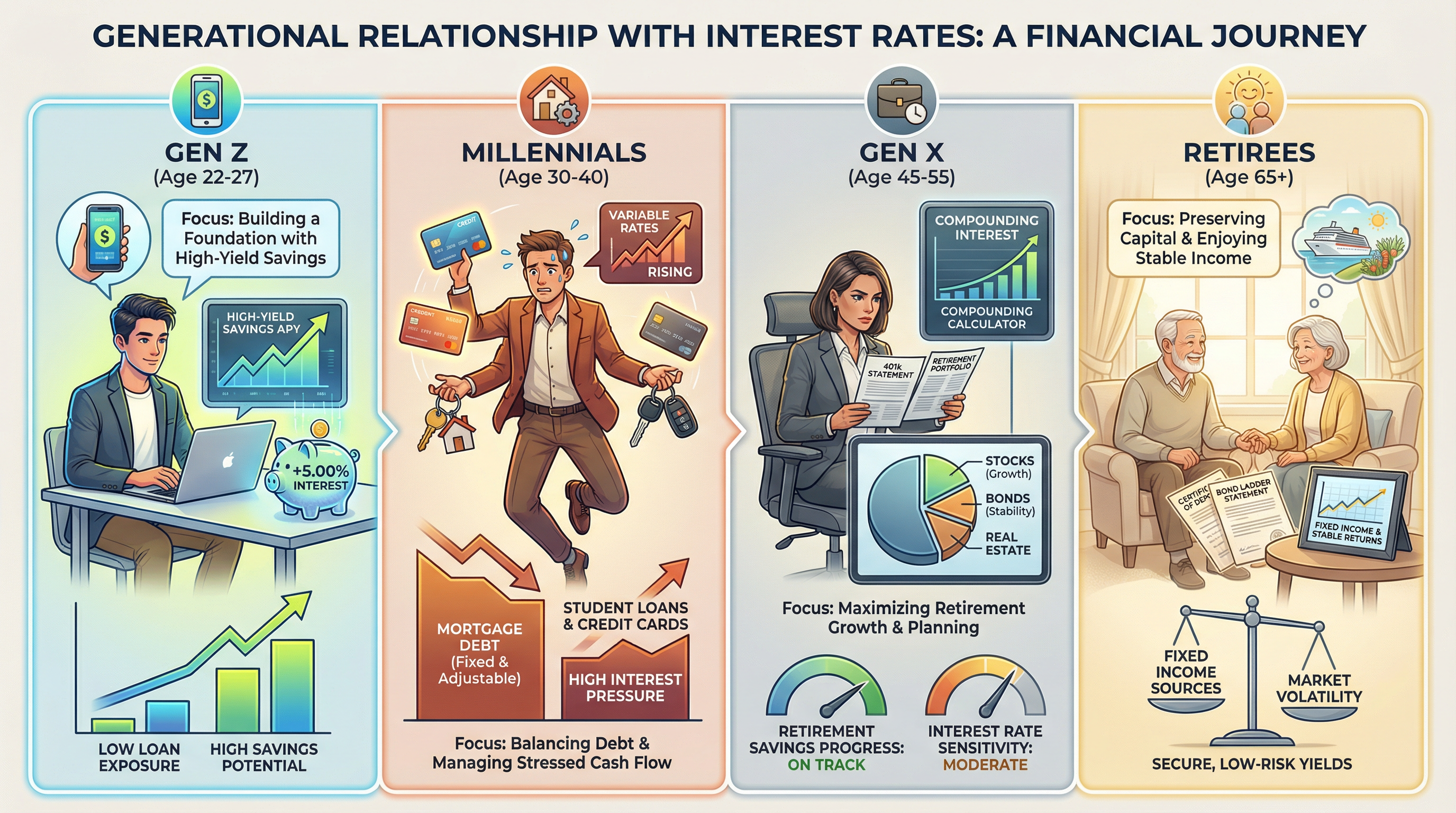
For Gen Z (Just Starting Out)
For those just entering the workforce, this environment is a mixed bag. You're likely not a homeowner yet, but you might be dealing with student loans and the need for a reliable car. High interest rates on auto loans and private student loans will continue to be a burden. However, the persistence of high-yield savings accounts is a golden opportunity. Earning 4-5% on your emergency fund or first down payment savings is a powerful way to build wealth early.
Key Takeaway for Gen Z: Prioritize building your savings in a high-yield account. If you need to borrow, focus on improving your credit score to qualify for the best possible rates, as the cheap-money era is on pause.
For Millennials (In the Thick of It)
Millennials are often juggling multiple financial goals: paying down credit card debt, saving for a house, and raising a family. The Fed's caution is a major headwind. Variable-rate credit card debt will remain expensive, making it harder to pay down balances. Those hoping for cheaper personal loans to consolidate debt might need to act sooner rather than later.
On the housing front, while the market is cooling, as we discussed in our article on home prices seeing their slowest growth since 2012, sticky mortgage rates will continue to challenge affordability. This makes it more important than ever to get your finances in order before entering the market.
For Gen X (Peak Earning Years)
Gen X is often in their peak earning years, focused on paying down mortgages and aggressively saving for retirement. For this group, the Fed's stance is less about borrowing and more about investment returns. A cautious Fed can be a drag on stock market growth, potentially impacting 401(k) balances. However, for those with cash on the sidelines, high-yield savings and CDs offer a safe, attractive return.
For Boomers and Retirees (Preserving Wealth)
For those in or nearing retirement, the news is surprisingly positive. Higher-for-longer interest rates are a boon for fixed-income investments. Retirees who rely on interest from savings, CDs, and bonds will continue to see healthy, low-risk returns. This provides a stable income stream to supplement Social Security and pensions, a welcome relief after over a decade of near-zero interest rates.
What About Inflation? The Elephant in the Room
One of the most critical factors driving the Fed's division is the stubborn nature of inflation. While prices have cooled significantly from their 2023 peak, they remain well above the Fed's 2% target. The most recent data shows inflation hovering around 2.7%, a level that makes some officials nervous about declaring victory too soon.
The concern is simple: if the Fed cuts rates too aggressively while inflation is still elevated, it could reignite price pressures, forcing them to reverse course and raise rates again. This "stop-start" approach would be damaging to the economy and erode the Fed's credibility. The hawks on the committee would rather err on the side of caution, keeping rates higher for longer to ensure inflation is truly under control.
For regular folks, this means the dream of 2019-era low interest rates is likely years away, not months. The Fed's 2% inflation target is non-negotiable, and until they're confident it's been achieved sustainably, they'll keep their foot on the brake.
The Macro-Economic Picture: Walking a Tightrope
The Fed is trying to pull off a very difficult magic trick: a "soft landing." They want to bring inflation down to their 2% target without causing a major recession and widespread job losses. The division seen in the minutes shows just how narrow their path is.
One interesting tidbit from the minutes was the mention of trade policy. Officials noted that tariffs were contributing to inflation, but they largely believed the effect would be temporary. This is a crucial point, as it shows the Fed is aware of how political decisions, like the trade policies we covered in our article on Trump's 2025 tariffs and their impact on retirement savings, can complicate their job.
If the economy slows too much, the Fed will be forced to cut rates aggressively. If inflation proves stubborn and stays above 3%, the new hawkish members may push to keep rates high or even raise them again, risking a recession. This is the tightrope they'll be walking all through 2026.
The Bottom Line
The era of predictable, steady rate cuts is over before it even began. The key takeaway from the Fed's latest minutes is uncertainty. The path forward for interest rates is now a coin toss, heavily dependent on the next few months of inflation and jobs data.
For regular folks, this means you can't count on borrowing getting significantly cheaper anytime soon. The smart move is to plan for rates to stay near their current levels for much of 2026.
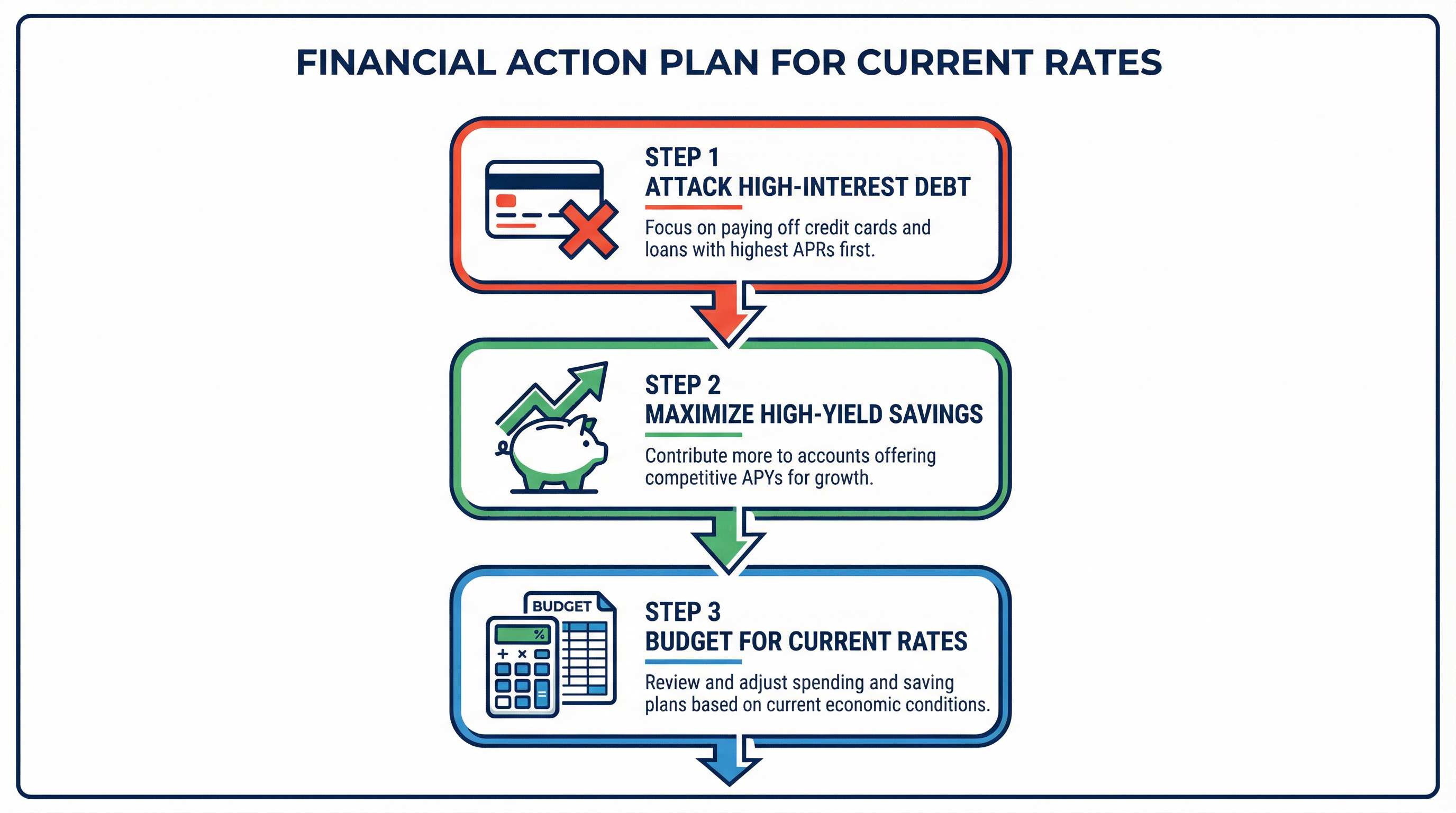
Your Action Plan:
If you have high-interest debt (like credit cards): Get aggressive. With rates staying high, this debt will continue to be a major drag on your finances. Consider a debt consolidation loan now to lock in a fixed rate before they potentially creep higher. Our personal loans guide is a great place to start your research.
If you're a saver: Maximize this opportunity. Move your cash from a traditional checking or savings account (earning 0.1%) to a high-yield savings account (earning 4-5%). This is one of the safest, easiest ways to grow your money in the current environment.
If you're planning a big purchase: Be prepared for higher financing costs. Whether it's a car or a home project, factor in today's interest rates into your budget. Don't assume rates will be lower in six months.
Key points to remember:
- 9-3 vote was the most divided since 2019
- 3.50-3.75% is the current federal funds rate
- 4 hawkish new voters join in 2026, raising the bar for cuts
- 2.7% inflation still above the Fed's 2% target
- High-yield savings remains attractive at 4-5%
Ultimately, the Fed's division is a signal to all of us to focus on what we can control: our budget, our savings rate, and our debt. The cavalry of cheap money isn't riding to the rescue just yet. Remember, we're not just faceless analysts; we're regular folks just like you, trying to make sense of it all. And we're in this together.
Need professional guidance? If you're unsure how to navigate these rate changes for your specific situation, Kapitalwise connects you with a vetted financial advisor for free — no obligation, and matching typically takes under 48 hours. We may earn a commission if you sign up.
Struggling with credit card debt in this high-rate environment? If credit issues are keeping you from qualifying for better rates, CreditFirm.net has helped over 80,000 people improve their credit reports since 1997 (BBB A+ rated). We may earn a commission if you sign up.
Frequently Asked Questions
Will my personal loan rate go down in 2026?
It's less likely now. While the Fed may still cut rates once or twice in 2026, the deep division and hawkish new voters suggest they will be very cautious. It's safer to assume personal loan rates will remain near their current levels for most of the year.
Is now a bad time to take out a personal loan?
Not necessarily. If you're using it to consolidate high-interest credit card debt, you could still save a lot of money. The key is that it might be better to act now and lock in a fixed rate rather than waiting for rates that may not materialize.
Why are Fed officials so divided?
They are looking at the same data and drawing different conclusions. The "doves" see slowing inflation and a cooling job market and worry about causing a recession. The "hawks" see inflation that is still well above their 2% target and worry about declaring victory too early, only to see prices surge again.
How do tariffs affect the Fed's decisions?
The Fed noted that tariffs from the Trump administration were a factor in inflation. Trade policy can push up prices on imported goods, making the Fed's job of controlling inflation more difficult. For more on this, see our analysis of Trump's 2025 tariffs.
What's the best thing I can do with my savings right now?
With interest rates high, a high-yield savings account (HYSA) is one of the best and safest places for your cash. You can earn 4-5% interest with virtually no risk, and your money remains accessible. It's a rare opportunity to get a solid return on your emergency fund or short-term savings.
References
[1] Federal Reserve. (2025, December 30). Minutes of the Federal Open Market Committee, December 9–10, 2025. [2] Cox, J. (2025, December 30). Fed minutes show officials were in tight split over December rate cut. CNBC. [3] Timiraos, N. (2025, December 30). Fed Minutes Detail Deep Divide on Timing of Further Rate Cuts. The New York Times.Stay Informed
Get weekly insights from the RegularFolkFinance community.
About the Author
RegularFolkFinance Team
Editorial Team
Published: Dec 30, 2025
We're not financial advisors. We're a team that spent hundreds of hours reading what real people experienced with financial products. Our analysis is based on real stories from actual users.