In This Article
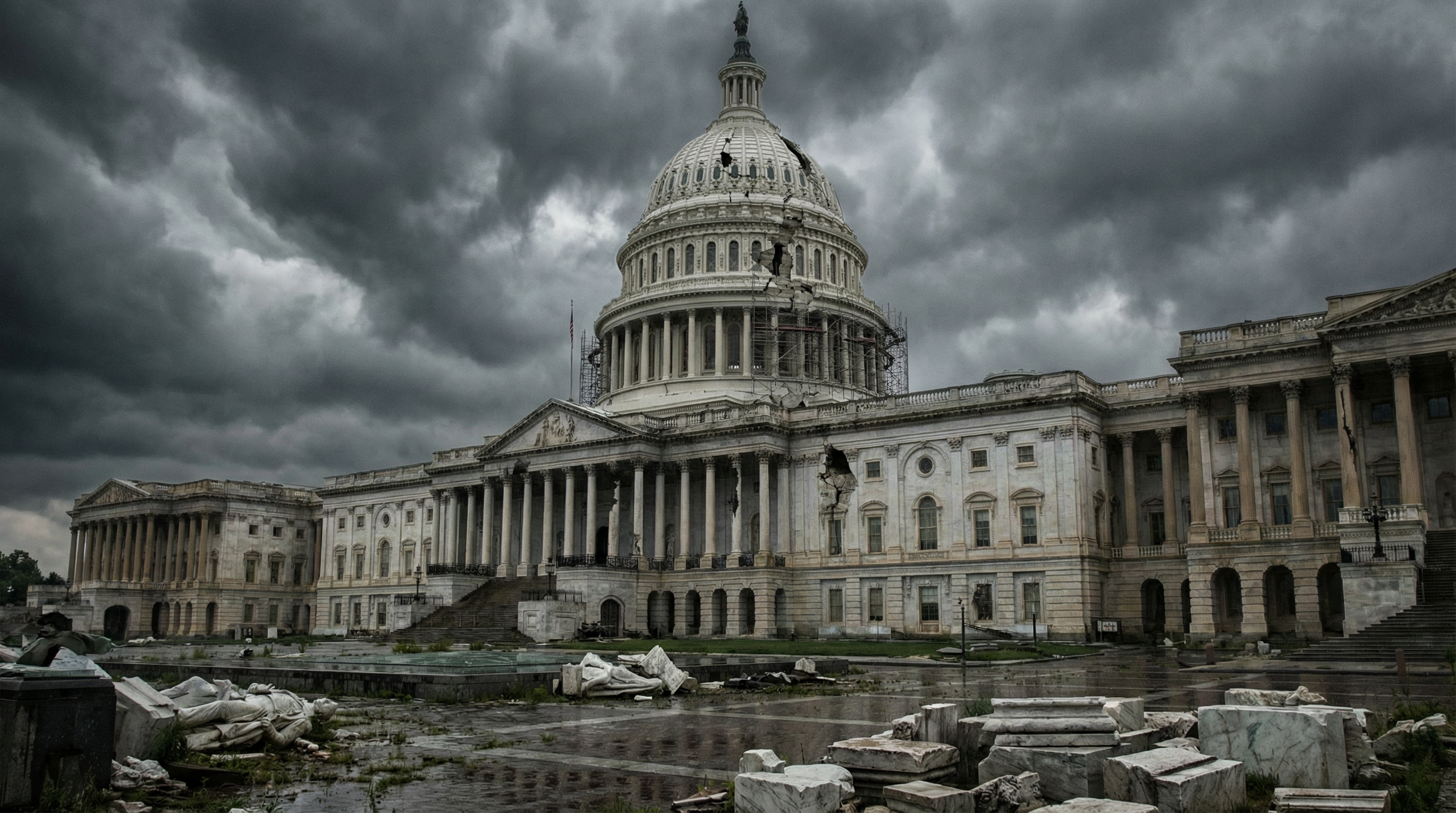
Happy New Year! We hope you had a great holiday, filled with family, friends, and a blissful ignorance of whatever Congress was (or wasn't) doing. Well, the party's over. Just 2.5 months after the longest government shutdown in U.S. history finally ended, our elected officials are already barreling toward another one. We're not financial advisors, just your friendly neighbors who've spent the day poring over congressional calendars and budget reports to figure out what's going on. For anyone with a federal job, a small business, or just a general interest in the U.S. economy not imploding, this is the most important story heading into 2026.
The Deadline: January 30, 2026
The clock is ticking. The short-term continuing resolution (CR) that ended the brutal 43-day shutdown expires on January 30, 2026. If Congress can't agree on a new spending package by then, large parts of the federal government will once again grind to a halt.
Here's the kicker: Congress has only funded 3 of the 12 appropriations bills that keep the government running. The other 9 are still stuck in political limbo.
What We Know So Far
According to the Military Family Advisory Network, here's the current status:
- The CR signed on November 12, 2025 expires January 30, 2026
- Only 3 of 12 appropriations bills have been passed
- SNAP (food stamps) is fully funded regardless of shutdown
- Most other federal programs face disruption
The Odds: Will They Actually Shut It Down?
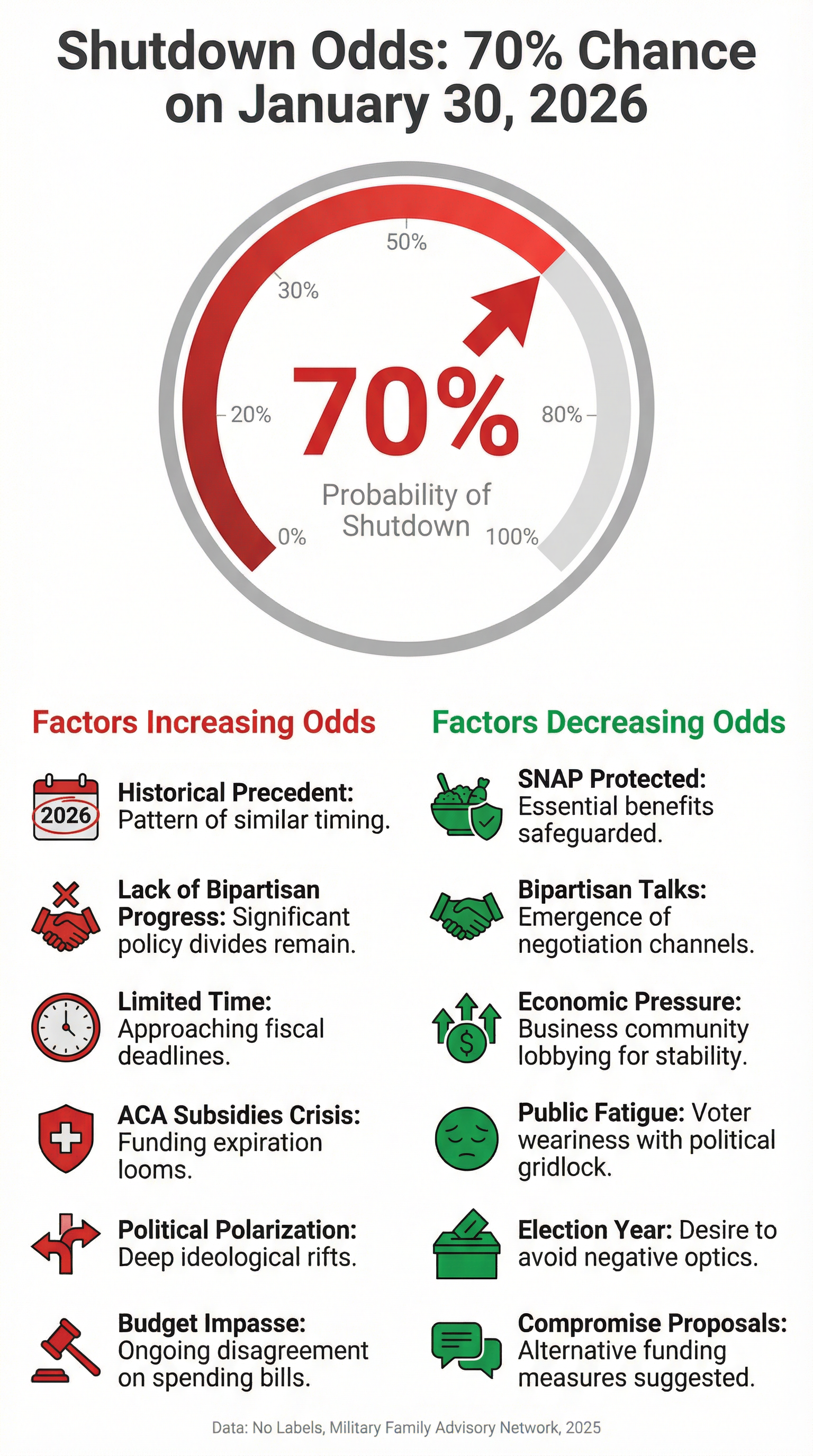
Based on our analysis of congressional calendars, political dynamics, and historical patterns, we're predicting a 70% chance of another shutdown.
| Factor | Impact on Odds | |--------|----------------| | Only 12 House session days in January | Increases odds | | Only 15 Senate session days | Increases odds | | 9 of 12 bills unfunded | Increases odds | | Political fatigue from 43-day shutdown | Decreases odds | | Election year positioning | Mixed impact |
Key Takeaway: The math doesn't lie. With limited session days and 9 unfunded bills, the odds of reaching a deal are slim.
The Economic Ramifications
Two shutdowns in three months would be unprecedented in modern U.S. history. The economic impact compounds:
- Federal employees face another round of missed paychecks
- Contractors may never recover delayed payments
- Consumer confidence takes another hit
- Small businesses near federal facilities suffer again
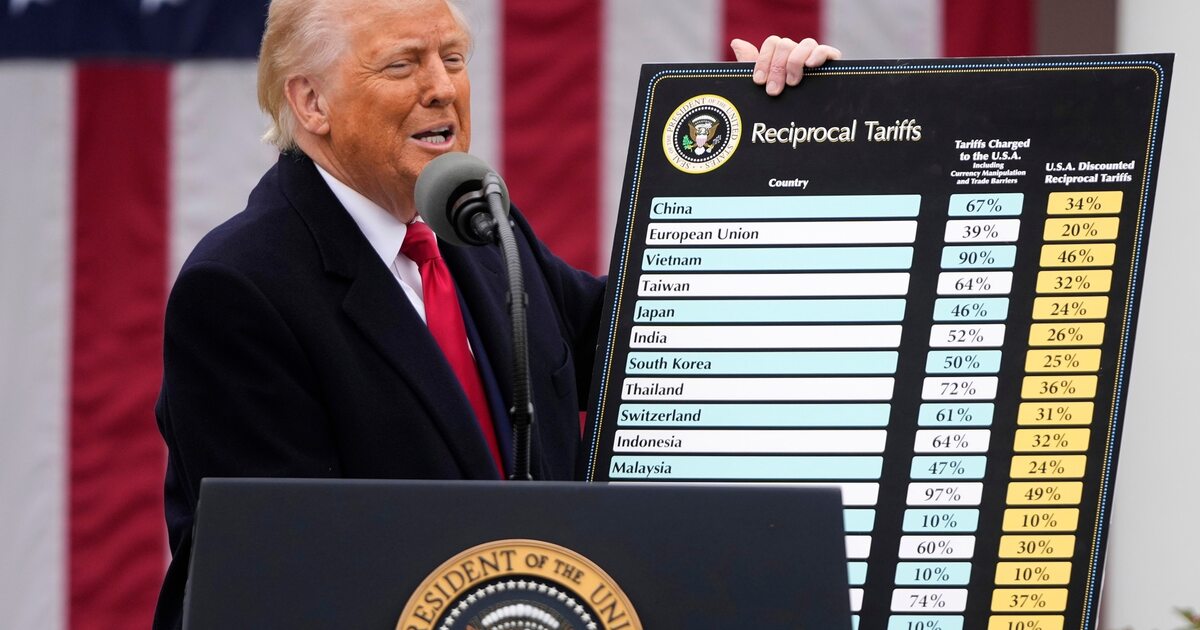
This instability doesn't happen in a vacuum. It adds to the economic uncertainty created by other factors, such as the trade policies we covered in our article on Trump's 2025 tariffs.
The Political Winners (Spoiler: Not You)
Here's the uncomfortable truth: some politicians benefit from shutdowns. They get cable news hits, fundraising spikes, and "fighter" credentials with their base.
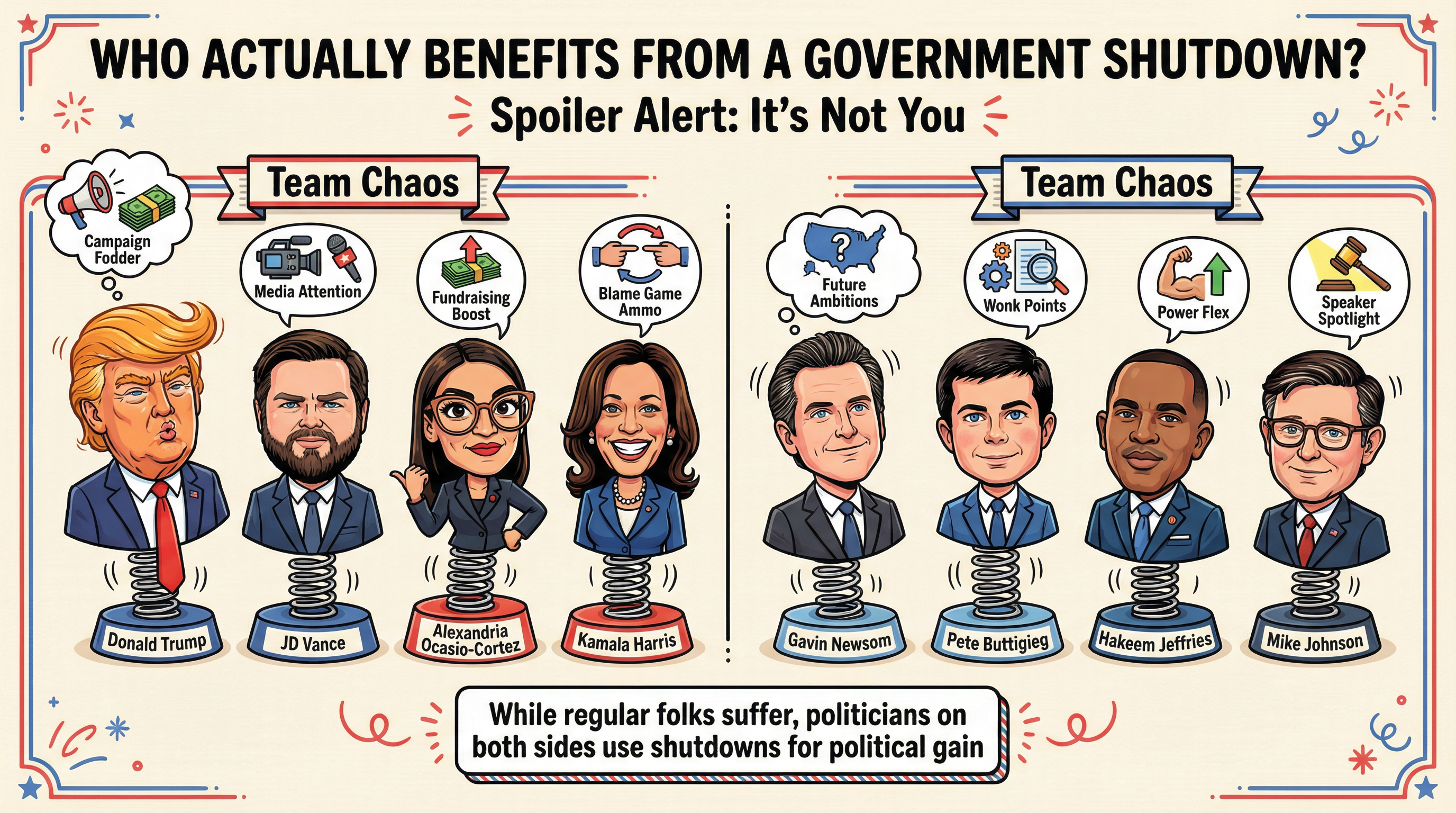
The losers? Regular people trying to get a tax refund, visit a national park, or just do their federal job.
The AI Angle: Why This Shutdown Is Different
Here's something nobody is talking about: the federal government has dramatically increased its reliance on AI systems since the last major shutdown.
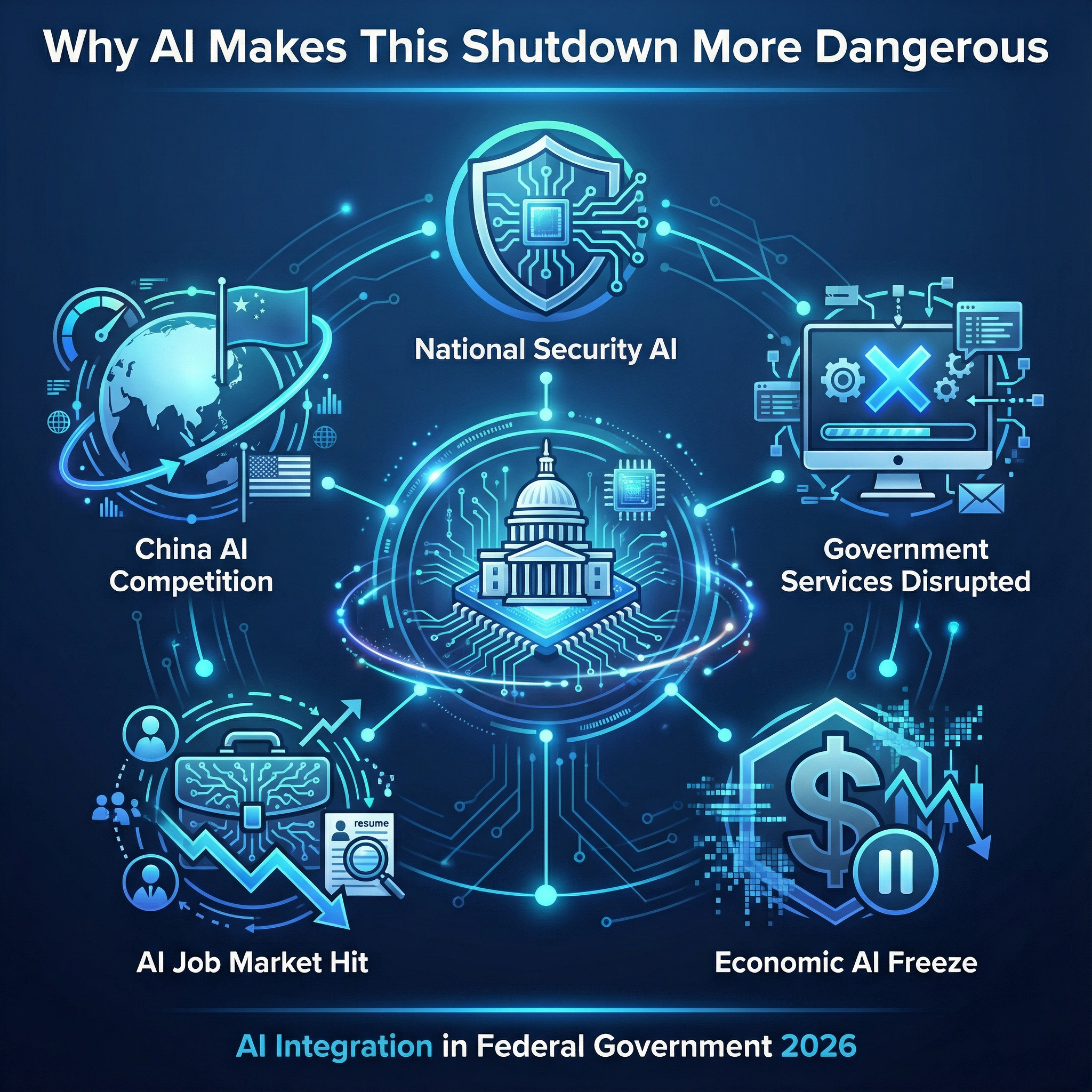
Five key AI-related risks:
- AI maintenance stops - Systems need human oversight that gets furloughed
- Security vulnerabilities - AI security teams sent home
- Data pipeline breaks - AI systems depend on data that stops flowing
- Restart chaos - Getting AI systems back online isn't like flipping a switch
- Institutional knowledge loss - Each shutdown accelerates brain drain
According to NBC News, new laws targeting AI and deepfakes are set to take effect in 2026, but implementation requires a functioning government.
Who Gets Hurt (A Lot)
Let's be specific about who suffers:
Federal Employees: 2 million+ workers face furloughs or working without pay. Maryland alone lost 15,000 federal jobs in 2025—a 9% drop in workforce.
Contractors: Unlike federal employees, contractors don't get back pay. Two shutdowns in three months could bankrupt small contractors.
ACA Recipients: 22 million Americans could see disruptions to Affordable Care Act subsidies.
Everyone Else: National parks close. Tax refunds delay. Passport processing stops. Food inspections pause.
How to Prepare Your Finances
Don't wait for Congress to get its act together. Here's your 3-step plan:
Step 1: Build Your Buffer
If you're a federal employee or contractor, aim for 2-3 months of expenses in liquid savings. Yes, that's a lot. But two shutdowns in three months proves why it's necessary. If you need help building a financial cushion, a vetted financial advisor can help you put together a plan.
Step 2: Know Your Status
Federal employees: Find out NOW if you're "essential" (work without pay) or "non-essential" (furloughed). This determines your cash flow during a shutdown.
Step 3: Have a Backup Plan
Explore our retirement planning strategies for more tips on protecting your long-term financial security during economic uncertainty. Consider:
- Side income options
- Credit line (established BEFORE you need it)
- Which bills can be deferred
Key Takeaway: The time to prepare is now, not January 29th. Build your emergency fund, know your employment status, and have a backup plan ready.
The Bottom Line
Congress has 30 days and a lot of political baggage. We're giving them a 30% chance of actually doing their job. That means there's a 70% chance you need to be ready for another shutdown.
We'll keep monitoring the situation and update this article as things develop. In the meantime, focus on what you can control: your emergency fund, your backup plans, and your own financial resilience.
Stay safe out there, neighbors.
Worried about your financial security? Whether it's building an emergency fund or protecting your retirement savings during uncertain times, a professional advisor can help you prepare. Kapitalwise matches you with a vetted fiduciary advisor for free — no obligation. We may earn a commission if you sign up.
Frequently Asked Questions
What are the actual odds of a government shutdown on January 30, 2026? Based on our analysis of congressional schedules, unfunded appropriations, and political dynamics, we estimate a 65-70% probability of at least a partial shutdown.
I'm a federal employee. Will I get paid? It depends on your designation. "Essential" employees work without pay during a shutdown but receive back pay afterward. "Non-essential" employees are furloughed and historically have also received back pay, though it's not guaranteed.
How does this affect my Social Security or Medicare? Social Security and Medicare are mandatory spending programs and continue during shutdowns. Your benefits should not be affected, though some administrative services may slow down.
Why is AI a bigger deal in this shutdown? The federal government has significantly increased AI integration since the last major shutdown. These systems require ongoing maintenance, security monitoring, and human oversight—all of which stop during a shutdown.
What can I do to prepare my finances? Build a 2-3 month emergency fund, know your employment status (essential vs. non-essential), establish credit lines before you need them, and identify which bills can be deferred if necessary.
References
-
Military Family Advisory Network. (2025, December 31). 2026 Government Funding Update. https://www.facebook.com/MilitaryFANet/posts/1274054141419455/
-
Lofton, P. (2025, December 31). New Year, Same Challenges for Congress. No Labels. https://nolabels.org/the-latest/new-year-same-challenges-for-congress/
-
NBC News. (2025, December 31). New laws in 2026 target AI and deepfakes. https://www.nbcnews.com/politics/politics-news/2026-new-laws-states-elections-midterms-ai-obamacare-aca-paid-leave-rcna247602
-
Maryland Matters. (2025, December 31). Maryland lost almost 15,000 federal jobs in 2025. https://marylandmatters.org/2025/12/31/maryland-lost-almost-15000-federal-jobs-in-2025-a-9-drop-in-the-workforce-state-data-shows/
Stay Informed
Get weekly insights from the RegularFolkFinance community.
About the Author
RegularFolkFinance Team
Editorial Team
Published: Dec 31, 2025
We're not financial advisors. We're a team that spent hundreds of hours reading what real people experienced with financial products. Our analysis is based on real stories from actual users.